
Face Recognition OpenAI’s Frontier platform
Face Recognition OpenAI’s Frontier platform is the next major shift in how businesses handle identity, security, and automation in 2026. For years, we’ve used AI to identify cats in photos or unlock our phones, but the Face Recognition OpenAI’s Frontier platform takes this to a professional, enterprise grade level. Imagine a world where your “AI coworkers” don’t just process data but actually recognize you, your team, and your permissions in real time to execute complex tasks. It’s not just about a camera spotting a face; it’s about an intelligent layer that understands who is interacting with a system and why they are allowed to be there.

-
What Exactly is the Face Recognition OpenAI’s Frontier Platform?
The Face Recognition Open Artificial Intelligence’s Frontier platform is part of OpenAI’s 2026 “Frontier” ecosystem, designed to help companies manage autonomous AI agents. While traditional facial recognition is a standalone tool, the Face Recognition OpenAI’s Frontier platform acts as a core identity layer. It integrates with a company’s CRM, internal databases, and security hardware to create a “shared context.” This means if you walk into a secure server room, the Face Recognition OpenAI’s Frontier platform can trigger an AI agent to log your entry, pull up your project files, and prepare your workspace before you even sit down.
-
Moving Beyond Simple Biometrics
In the past, facial recognition was a binary “Yes” or “No” check. The Face Recognition OpenAI’s Frontier platform utilizes the reasoning power of models like GPT 5.2 to understand nuance. It can analyze intent, detect liveness to prevent deepfake “spoofing” attacks, and even manage permissions based on visual cues. Analytically speaking, the Face Recognition Artificial Intelligence’s platform reduces the “time to trust” for autonomous access control Dubai systems, ensuring that AI agents only take orders from verified, authorized humans.
-
Real World Use Cases The Digital Coworker
Think about a large scale warehouse or a high security hospital. In these environments, the Face Recognition OpenAI’s Frontier platform allows ABM INNOVATIVE FZE agents to track who is handling specific sensitive materials. If an unauthorized person enters a restricted zone, the Face Recognition OpenAI’s Frontier platform doesn’t just sound an alarm; it can proactively lock digital systems and notify the supervisor’s AI assistant. It’s a storytelling shift from “security camera” to “intelligent overseer.”
-
The “Humans Only” Social Initiative
Rumors in early 2026 suggest OpenAI is testing a social layer using the Face Recognition OpenAI’s Frontier platform technology to eliminate bots. By requiring a “proof of personhood” via the Face Recognition OpenAI’s Frontier platform, the network ensures every interaction is with a real human. This use of the Face Recognition Artificial Intelligence’s platform could solve the epidemic of synthetic spam and fake engagement that has plagued the internet for a decade.
Implementing the Face Recognition OpenAI’s Frontier platform requires a strategic blend of hardware integration and the new 2026 “Agentic IAM” protocols. Because the Face Recognition OpenAI’s Frontier platform is designed as an enterprise operating layer, it doesn’t just “see” a face; it connects that face to a secure digital identity. Below is a technical guide to getting your organization ready for the Face Recognition OpenAI’s Frontier platform integration.

Hardware Readiness and Edge Pre Processing
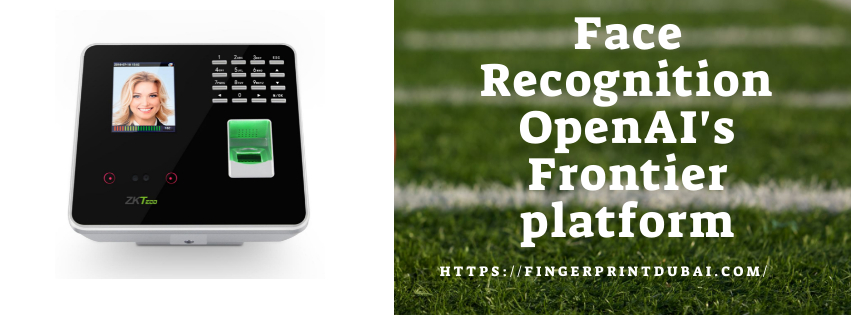
Before the Biometric Recognition OpenAI’s Frontier platform can work, your physical cameras must be compatible with modern “liveness” detection. The Face Recognition OpenAI’s Frontier platform performs best when cameras support infrared (IR) or depth sensing to prevent spoofing. You don’t need to replace every camera, as the Face Recognition iris Frontier platform can often interface with existing NVR (Network Video Recorder) systems via RTSP streams. Analytically, the goal here is to minimize latency by using edge computing gateways that “clip” the face and send a metadata hash to the Face Recognition OpenAI’s Frontier platform.
Configuring the Agent IAM Layer
The “secret sauce” of the Finger Recognition OpenAI’s Frontier platform is its Agent Identity and Access Management (IAM). In this step, you assign specific “Agent IDs” to your human staff within the Finger & Face Recognition OpenAI’s Frontier platform console. When the Face Recognition OpenAI’s Frontier platform recognizes a face, it doesn’t just unlock a door; it “authenticates” a session for that person’s AI coworkers. This ensures that if a manager is recognized by the Face Recognition OpenAI’s Frontier platform, their personal AI assistant is simultaneously granted access to the secure data needed for the task at hand.
Integrating with the Frontier SDK
Developers use the Face Recognition & Finger Frontier platform SDK to create “event triggers” based on visual recognition. For example, you can write a script where the Face Recognition OpenAI’s Frontier platform identifies a technician entering a lab. The Face Recognition OpenAI’s Frontier platform then sends a signal to the “Execution Runtime” to boot up specific specialized software tools for that technician. By using the Face Recognition UAE’s Frontier platform API, companies can move away from traditional badges and keycards, which are easily lost or stolen.
Setting Governance and Privacy Access Control
Privacy is a core pillar of the Face Recognition Open source Frontier platform, utilizing a “Zero Knowledge” architecture where possible. You must configure your Face Recognition OpenAI’s Frontier platform “Semantic Layer” to define exactly what happens to the biometric data. In most setups, the Face Recognition IRIS Frontier platform discards the raw video immediately after the identity hash is verified. This keeps your company compliant with global regulations while still reaping the efficiency benefits of the Face Recognition OpenAI’s Frontier platform.
FAQ: Everything You Need to Know
Is my biometric data safe on the Face Recognition OpenAI’s Frontier platform? OpenAI has built the Face Recognition Open source Frontier platform to meet SOC 2 Type II and ISO 27001 standards. The platform typically uses on device processing or encrypted “hashes” of your face, meaning the actual image of your face isn’t stored in a giant, hackable database.
How does the Face Recognition Digital Frontier platform handle deepfakes? The Face Recognition UAE’s Frontier platform uses advanced “liveness detection.” It looks for micro movements, skin texture, and light reflections that a 2D screen or a synthetic video cannot replicate, making the Face Recognition OpenAI’s Frontier platform highly resistant to modern AI generated fraud.
Can I use the Face Recognition Digital Frontier platform for my small business? As of early 2026, the Face Recognition OpenAI’s Frontier platform is primarily rolled out for enterprise partners like Uber, Oracle, and HP. However, broader availability for smaller developers to plug into the Face Recognition OpenAI’s Frontier platform via API is expected later this year.
Conclusion
The Face Recognition OpenAI’s Frontier platform represents the maturation of AI from a conversational novelty into a fundamental piece of business infrastructure. By bridging the gap between physical identity and digital execution, the Face Recognition OpenAI’s Frontier platform allows us to trust our AI agents with more responsibility than ever before. As we move further into 2026, the Face Recognition UAE’s Frontier platform will likely become the standard for how we prove who we are in an increasingly automated world. Whether it’s securing a boardroom or verifying a social media post, the Face Recognition Digital Frontier platform is the “intelligence layer” that makes it possible